
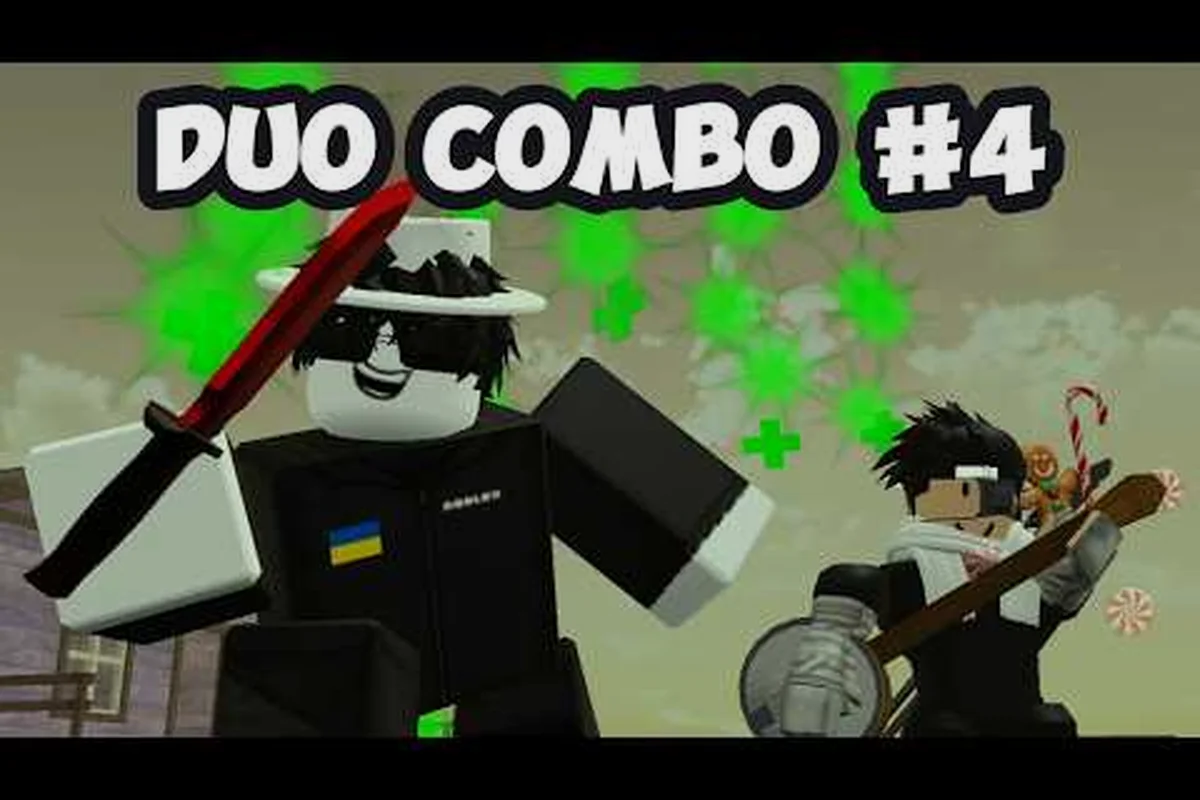
Playing Dead Rails with friends works best when you choose the right server, assign clear roles, and agree on the rules before boarding. This guide explains how to play with friends, compares public and private sessions, and shows when a test server or event mode fits your group best.
To learn the controls and coordinate with friends, check the Dead Rails how to play with friends gameplay video for the relevant mechanics.
How to Play Dead Rails With Friends
The basic multiplayer routine is straightforward: choose a compatible server, join with your friends, coordinate around the train, and keep moving toward the objective. The right setup matters because a crowded 16-player crew can feel chaotic, while a smaller private group offers more control over fuel, repairs, looting, and boss attempts.
Start by deciding whether your group wants a relaxed social run or a competitive challenge. A public-server crew is ideal for meeting other players and experiencing the full shared-server atmosphere. A private-session group is better for practicing routes, testing unfamiliar classes, or organizing a fixed roster.
| Group goal | Best starting point | Main advantage | Main drawback |
|---|---|---|---|
| Meet other players | Public server | Large, unpredictable crew | More competition and noise |
| Practice with a fixed team | Private session | Better coordination | Requires the group to organize |
| Test new content | Test server | Access to developing features | Features may change |
| Run a seasonal challenge | Event mode | New rules and rewards | Limited availability |
| Learn the core loop | Small public crew | Easy social entry | Less control over teammates |
The key multiplayer lesson is that shared responsibility does not mean shared attention. A successful crew divides the train’s survival tasks into clear roles: one driver controls the locomotive, one player manages fuel, one loots for scrap and supplies, and one defender covers the cars against approaching enemies. For example, in a 16-player public-server crew, role confusion can let the locomotive run out of fuel while nobody reloads a weapon; in a smaller private session, assigning roles before departure makes each player accountable without leaving other systems unattended.
Agree on the Run Plan
Before your group starts, settle on the objective and the level of seriousness. You can treat the first run as a learning session, a route test, or a boss attempt, but calling it a boss attempt after spending an hour looting is likely to frustrate everyone.
Use a short voice-chat agreement that covers the essentials: one player drives, another monitors fuel, and the remaining players handle loot and defenses. Agree on three simple callouts—“route ahead,” “fuel low,” and “retreat”—so everyone can act quickly during a host encounter. For example, if the driver spots a dangerous stretch ahead, the driver should warn the fuel crew to stop collecting resources until the train reaches a safer section. This prevents a late fuel shortage or missed boss warning from turning a coordinated run into a rushed, disconnected attempt.
-
Driver: Controls the train and prioritizes the safest available route.
-
Fuel crew: Watches fuel consumption and communicates when reserves need attention.
-
Loot team: Searches buildings, manages inventory space, and shares useful finds.
-
Defense team: Handles hostile creatures, traps, and unexpected route hazards.
-
Group decision: Establishes whether the crew keeps moving, camps a location, or retreats together.
Even without voice chat, assign these roles in the game’s group chat so each update has a clear source and a fast response. The driver can post “boss ahead” or “route blocked,” while the fuel crew reports “fuel low” before reserves become critical. The loot team can use “leave the loot” when an item is not worth delaying the train, and the defense team can warn about a hostile creature or trap. A simple format—“role, warning, suggested action”—reduces confusion during a Dead Rails public server run and prevents separate players from describing different problems at once.
Assemble a Reliable Friend Group
A group of four to eight players usually provides enough manpower for repairs, exploration, and defense without creating too many conversations. Larger teams can still succeed, but they need stronger communication because train orders, inventory distribution, and boss positioning become harder to coordinate.
Start with balanced roles rather than stacking the same class. If one member handles driving, another focuses on fuel, and the rest cover combat and exploration, the crew can keep functioning even when someone is busy looting. Classes and available roles can change as the game develops, so confirm the current options before each session.
Public, Private, and Test Server Choices
Server selection changes both the pace and the amount of control your friends have. A Dead Rails public server provides the most immediate social experience, while a private group allows more deliberate preparation. The Dead Rails test server is a separate consideration because it is intended for experimentation with developing content.
| Server type | Best for | Control over the session | Typical group experience |
|---|---|---|---|
| Public server | New groups and social play | Low | Fast looting, divided rewards, frequent threats |
| Private session | Established friends and route testing | High | Predictable coordination and focused preparation |
| Test server | Players checking new builds or changes | High within the session | Experimental rules and possible instability |
| Event server | Seasonal objectives | Moderate | Rule-specific pressure and themed rewards |
Play on a Public Server
A public server is the easiest option when everyone wants to jump in without building a private roster. Community reports describe the standard server capacity as 16 players, so expect enough activity to make the train feel busy. Public matches also tend to move quickly because strangers can find resources and challenge enemies without coordinating in advance.
That speed has benefits. New crews can test which character abilities cooperate, discover which loot categories are useful, and experience the route without needing an experienced organizer. However, rapid movement can leave less time for deliberate upgrades. If your friends prefer conversation and experimentation, choose a public lobby and agree not to punish slower explorers.
Useful public-server habits include checking the current route, announcing major discoveries, and making sure the fuel handler is not forced to defend alone. Public loot disappears quickly, so decide in advance whether the group prioritizes speed, gear quality, or boss preparation.
Use a Private Session for a Fixed Crew
A private session gives your group a cleaner way to assign responsibilities and test a train build. Community field notes describe private servers as a convenient place to rehearse routes and boss attempts without interference from unrelated players. This makes them especially useful when the crew wants to measure a specific strategy over several attempts.
Private play does not automatically make the team better. If five people join but nobody owns the driver or fuel role, the same confusion remains. A private session works best when the group agrees on a shared build plan, a meeting point, and a rule for abandoning a side objective that takes too long.
| Planning item | Public crew | Private crew | Test crew |
|---|---|---|---|
| Route selection | Follow the strongest group | Preplanned and tested | Frequent changes |
| Loot priorities | Flexible | Chosen before departure | Used to compare results |
| Boss timing | Depends on the crowd | Planned around the roster | Used for balance testing |
| Communication | Brief public messages | Continuous team chat | Continuous and documented |
| Main benefit | Fast social entry | Strong coordination | Early feature access |
Consider the Test Server
The Dead Rails test server is useful when friends specifically want to inspect new classes, train changes, or experimental rules. Because it exists for development, its features may differ from normal play, and any balance or reward details may change. Treat a test session as observation and experimentation rather than a reliable way to plan long-term rewards.
Use the same session template you would use with a private crew: assign roles, record which changes seem stronger, and avoid treating a temporary test-server advantage as permanent. If you are following the game’s development cycle, the Dead Rails game release update provides useful context for alpha, beta, and release-related changes.
Dead Rails Event Mode Choices for Groups
Special rules can make a familiar train route feel completely different. The Dead Rails event mode may alter conditions, goals, threats, or available choices, so the crew should study the event description before departure. Seasonal events are useful for groups that enjoy a shared challenge but want a different objective from a standard run.
| Event option | Central challenge | What friends should practice |
|---|---|---|
| Edison’s Revenge | Survive a Halloween boss encounter | Positioning, protection, boss damage |
| Invasion | Survivors defend lanterns while an Invader controls zombies | Objective defense and role swaps |
| Nightmare | Harder spawns and tighter resources | Resource discipline and recovery |
| Scorched Earth | Brutal desert conditions and hazards | Route planning and fortification |
| Bite Sized | A shortened run | Speed, routing, and boss timing |
| Endless | No conventional finish line | Train testing and endurance planning |
The Dead Rails Halloween mode includes Edison’s Revenge, which community reports describe as featuring Edison Prime as the final boss. The same reports note that it returned during the 2026 Dead of Night event. For a more focused breakdown of that encounter, the Edison’s Revenge mode guide explains its objective and role requirements.
Edison’s Revenge and Invasion
Edison’s Revenge works best when the group treats the final encounter as a coordinated defense rather than a race to deal damage. A player focused on protection may be more valuable than another damage dealer if the boss can be avoided for several attempts. Decide who draws attention, who repairs equipment, and when the team should reposition.
Invasion reverses the usual relationship between survivors and enemies. According to community field notes, survivors protect lanterns while the Invader commands zombies. The defense side therefore needs to monitor several objectives, while the attacking side benefits from dividing attention and creating distractions.
Nightmare, Scorched Earth, and Bite Sized
Nightmare reportedly introduces harder spawns, tighter resources, and higher bond rewards for completed runs. It rewards preparation because every unnecessary detour can place pressure on fuel, ammunition, and healing supplies. Smaller crews often have more predictable control over these resources, even when public-server groups can benefit from rapid recruiting.
Scorched Earth is described by community reports as a harsh desert variant with more dangerous hazards and a badge-level clear. The emphasis should be on route selection and fortification rather than assuming the standard route will work. Bite Sized follows the opposite idea: its shorter structure rewards fast decisions and favors players who can keep a group moving.
Endless and the Seasonal Calendar
Endless removes the normal finish line according to community reporting, making it useful for testing train builds and endurance plans. It also changes the purpose of a session: a group that only cares about speed may have less reason to continue, while a group experimenting with defenses may find the mode more rewarding.
Seasonal content can return, so check the live event panel before assuming that the Dead Rails Christmas event is available. Community records describe seasonal events around Christmas, summer, and the wider anniversary calendar, but availability depends on the current update. The Dead Rails Christmas update overview is a good place to compare the seasonal schedule before planning a themed group run.
Coordination Tactics for a 16-Player Crew
A full 16-player group can overwhelm a route, but that size also provides valuable redundancy. Several people can watch different threats, rescue teammates, or carry resources while others focus on a difficult encounter. The problem is not the player count itself; it is allowing all 16 people to make unrelated decisions at the same time.
Organize the Train by Function
Use the train as a shared home base and assign functional zones. For example, one section can handle repairs, another can serve as a meeting point after a fight, and a third can hold the crew’s most important supplies. The exact layout can vary, but a shared location prevents players from scattering and losing track of one another.
| Crew layer | Main responsibility | Communication trigger |
|---|---|---|
| Leadership | Route, boss, and retreat decisions | Announce every major order |
| Operations | Fuel, driving, repairs | Report status changes immediately |
| Search team | Loot and building exploration | Provide a return time |
| Defense | Enemies, traps, objective protection | Warn before engaging |
| Support | Healing and teammate recovery | Prioritize stranded players |
Leadership should be situational rather than a permanent hierarchy, especially on a Dead Rails train where the route and encounter priorities can change quickly. A player with strong knowledge of rail junctions can handle travel, while a more experienced fighter may call boss positioning and defensive angles during an encounter. The crew should switch roles when a locomotive approaches a hazard, a boss spawns, or a teammate must repair the train, then restore the previous assignments afterward. This keeps the leadership table’s “route, boss, and retreat decisions” from becoming a bottleneck and lets the group react to changing threats without arguing over rank.
Reduce Loot Conflicts
Looting is one of the easiest places for a large crew to lose time and trust. Give each searcher a category or area, then require a short inventory report. Items can be judged by immediate need rather than by who found them first, especially when a repair, weapon, or healing item could save the run.
A useful rule is to separate run-critical supplies from optional upgrades. The fuel handler and driver should not need to negotiate for a basic resource while a horde or boss is approaching. Optional loot can be evaluated afterward, when the crew has survived the immediate danger.
Set Clear Retreat Rules
Not every fight deserves to be attempted. Before entering a difficult area, establish whether the crew retreats when one player is down, when the driver is threatened, or when a required repair becomes impossible. A predetermined rule prevents arguments during the most stressful moments.
The same discipline applies to exploration. If a search team exceeds its agreed return time, the rest of the group can continue without waiting, but it should know where that team went. Voice chat is helpful, although structured text commands can work when players are spread across the train or temporarily disconnected from one another.
Event and Training Scenarios by Crew Size
The right server type depends on the size and purpose of your group. Two friends often need a private session more than a full public crew because they can divide loot and responsibilities without negotiation. Larger groups may prefer public matchmaking for the social pace, while event modes provide a common objective that reduces arguments about what to prioritize.
| Crew size | Recommended approach | Primary reason |
|---|---|---|
| 2–3 friends | Private session or small public crew | Simple coordination and fair sharing |
| 4–8 friends | Private session for training, public server for variety | Balance of control and social activity |
| 9–16 friends | Public server with strict role groups | Enough manpower for larger objectives |
| Testing group | Test server | Compare developing features and builds |
| Seasonal group | Event server | Everyone shares the same special rules |
Two to Three Friends
Small groups should avoid joining a crowded server unless they actively want competition. Two or three players can split into a driver, a support role, and a flexible combat or looting role. The biggest benefit of a private session here is consistent pacing; nobody needs to chase down a stranger for fuel or medical supplies.
These groups can also use the standard session as a tutorial. New players can learn basic train functions, test character abilities, and learn how to protect valuable loot without a full lobby complicating the experience. If your group wants occasional social play, choose a public server and set a meeting point before departing.
Four to Eight Friends
This is a flexible range for most organized groups. A four-player group can create a clear quartet of roles, while eight players can split into two teams without losing coordination. A private session is ideal for rehearsing a boss, and a public server can reveal how the same build performs when unexpected teammates alter the pace.
Use two short drills during the first session. The first can focus on looting, fuel, and repair efficiency. The second can test an emergency response, such as a teammate being downed while the train is moving. These drills create habits without turning the full run into a formal competition.
Nine to Sixteen Friends
A large crew needs a private session or a carefully managed public lobby. Nine or more players can cover nearly every task, but communication becomes the main challenge. Divide the group into functional squads, and make sure the driver still receives clear orders without everyone speaking at once.
Large crews also benefit from a shared progression objective. Rather than every player pursuing a separate item, the group can agree on the route, the target boss, and the supplies required for the next stage. The Dead Rails Werewolf Hunter challenge provides another useful goal for a team that wants a specific combat test rather than a standard run.
Private Training Drills Before a Group Event
Private sessions are most effective when they have a defined training purpose. Simply entering a private lobby and improvising may reproduce the same problems that caused the group to move away from public play. Choose one measurable goal, run a short test, and note the result before trying another route.
Fuel and Repair Drill
Assign a dedicated fuel handler and require them to report the current level at regular intervals. The driver chooses a route that balances progress and resource use. The rest of the group observes whether anyone is consuming supplies without coordinating with the handler.
The useful metric is not simply how far the train travels. A good drill also checks whether the group can recover from a fuel mistake, repair damage, or a sudden change in route. Community reports suggest that tighter resource conditions in harder modes make this coordination especially important.
Boss Positioning Drill
Start with a protected area or an easier encounter before attempting the event boss. Record who is dealing damage, who protects the driver, and who is responsible for healing. Then review whether damage is being wasted because the group is spread too thin.
Edison Prime, for example, should be approached as a coordinated encounter rather than a race for damage. Players can use the Dead of Night update overview to understand how Invasion and the broader Halloween event fit around the current seasonal content.
Route and Endurance Drill
Endless is a natural environment for comparing routes, but the group does not need a special mode to train. Set checkpoints in a normal run, compare fuel use, and record which route creates the smoothest teamwork. This is especially valuable for a Dead Rails alpha group evaluating new mechanics, because repeated tests can reveal whether a change improves or disrupts the previous strategy.
Keep the test notes simple: date, server type, route, event, crew size, and the main problem encountered. The Dead Rails test server can produce volatile results, so record the build or patch whenever possible. Without that context, a week-old observation may be treated as current when it is no longer accurate.
Frequently Asked Questions
Can you play Dead Rails with friends in a private server?
Yes. A private session is one of the most practical choices for a fixed group because players can organize roles, test routes, and practice boss attempts without unrelated participants interfering. Your exact setup options may depend on the current game version, so confirm private-session access and available settings before the group plans its next run.
Is a public server better than a private server for friends?
A public server is better for quick social play, meeting new players, and experiencing the full 16-player atmosphere. A private server is better for coordination, fair distribution of attention, and controlled practice. If everyone already knows the game, a private training session usually provides a better first test before returning to public matchmaking.
Should friends use the test server for normal play?
The test server is better for examining new classes, experimental mechanics, and developing balance than for planning permanent rewards. Its features may change without the same notice as standard content, and community field notes can become outdated after patches. Use a standard or private server when you want the most representative version of normal play.
Which event mode is easiest for a small group?
A shortened mode such as Bite Sized can suit players who want a faster shared session, while Nightmare and Scorched Earth require tighter resource and route coordination. The best choice depends on whether the group wants a quick objective or a more demanding survival challenge. Check the live event description for exact current conditions.
What is the best way for friends to share loot and roles?
Assign functional roles before the run and use a simple priority system for supplies. Fuel, repairs, and healing should go to the players responsible for those tasks, while optional gear can be distributed after the immediate danger passes. Short status messages prevent confusion, especially when the crew approaches a boss or separates to explore.