
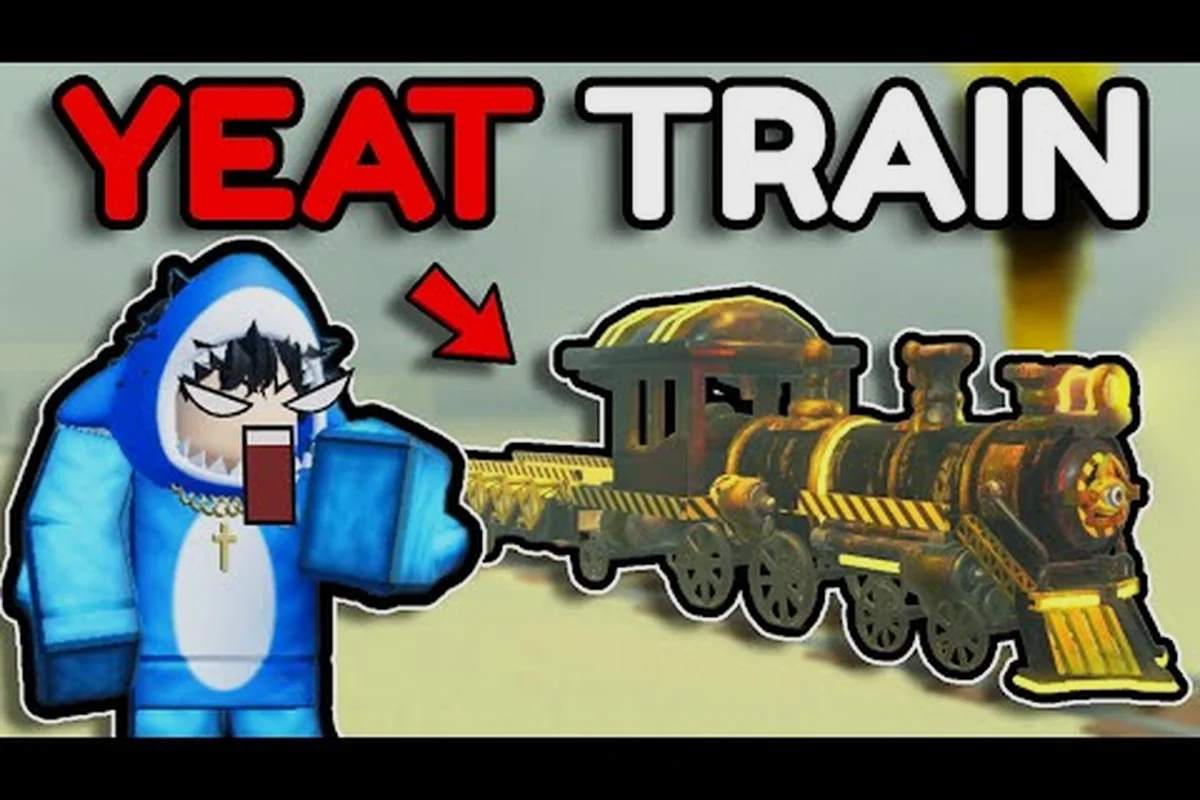
Keeping the Dead Rails Yeat train operational starts with managing its fuel, checking the track ahead, and deciding which upgrades are worth the time. If the train stops moving, first inspect the engine and wheels for a derailment, blockage, or damaged part, then confirm that the route remains clear before adding fuel or repairing the locomotive. The right changes depend on the train’s condition and the route’s demands, so compare upgrades by their effect on reliability and performance rather than installing every available option.
Yeat Train Coal and Cargo Upgrade Order
A useful Dead Rails Yeat train is less about stacking every available part and more about preventing failures before they happen. The locomotive needs a dependable coal supply, enough capacity for valuable cargo, and a clear line ahead. Understanding those priorities prevents the common mistake of spending resources on cosmetic parts while the engine still struggles through basic travel.
Community field notes identify three recurring reasons a train stops: an empty stove, a blocked track, or a driver error. These are useful checkpoints because each failure produces a different symptom. A fuel problem usually follows heavy consumption, a blockage involves the route ahead, and a driver error tends to happen when multiple people issue conflicting instructions or the controls become crowded.
| Upgrade priority | Why it matters | Best use | Common mistake |
|---|---|---|---|
| Coal capacity | Supports longer travel between refueling stops | Primary fuel and utility builds | Carrying a large reserve without a protected storage plan |
| Cargo space | Improves the value of each successful run | Passenger, resource, and event routes | Adding carriages that the engine cannot support comfortably |
| Engine protection | Reduces the impact of collisions or attacks | Late-route and combat-heavy travel | Assuming durability eliminates the need for careful driving |
| Driver controls | Prevents conflicting commands | Solo and cooperative runs | Letting several players change direction and speed at once |
The Yeat train performs best when these systems are upgraded in a deliberate order. Fuel capacity comes first because a stopped engine cannot recover without a solution. Cargo and protection come next, while the driver role should be assigned clearly for the entire journey.
Fuel Comes Before Every Other Upgrade
Coal management is the foundation of reliable travel. A large coal pile is not automatically a strong build if the crew cannot reach it safely, transfer it efficiently, or reload the stove before the engine loses pressure. Reserve fuel should therefore be placed in a dedicated carriage with a clear route to the locomotive.
The exact fuel figures and consumption rates can change with patches, so players should treat any precise number as version-dependent. The practical rule is more dependable: watch the stove during long stretches, refill before entering dense outlaw territory, and do not wait for the engine to make a sudden loss of speed as the only warning.
Coal reserve is the most important recurring resource for this locomotive. A compact setup with one protected fuel carriage can be easier to manage than a sprawling train where coal is scattered across several cars. For example, keeping the tender close behind the locomotive preserves access to the stove and reduces the number of cars exposed to bandits; adding more wagons may increase carrying capacity, but it also lengthens the route between the locomotive and its coal supply.
The Dead Rails cannon and train-part overview can help compare equipment categories before scarce materials are committed, but the choice should follow the locomotive’s role in the train. A cannon consumes ammunition and adds weight, so a heavy weapon may be less useful than a reliable tender, a protected coal carriage, or a wagon with enough capacity to carry useful cargo. Consider the route, expected outlaw pressure, and whether the train can stop safely for reloading; extra equipment is valuable only if the crew can reach and operate it without slowing the engine or separating the coal supply from the locomotive.
Dead Rails Train Not Moving Troubleshooting Checklist
When the Dead Rails train is not moving, stop adding speed and diagnose the locomotive in a fixed order. This prevents players from repairing a harmless issue while the real obstruction remains. The fastest check starts with the stove, continues to the track, and ends with the driver controls.
| Symptom | Likely cause | Action to take | Follow-up check |
|---|---|---|---|
| Engine fades gradually | Low fuel | Add coal to the stove and confirm it is burning | Watch whether speed returns |
| Engine stops on open track | Driver error or missing control input | Review the assigned driver and current command | Try one new instruction at a time |
| Train stops beside an obstruction | Blocked track | Inspect the rails and clear debris ahead | Move slowly until the path is clear |
| Train stops after a collision | Damaged or overheated engine | Check the locomotive condition and repair needs | Avoid forcing another immediate restart |
| Train starts, then stalls again | Insufficient coal or unstable fuel flow | Check the stove and fuel-transfer area | Reserve more coal before continuing |
Treat the table as a diagnostic map, not a universal diagnosis: each locomotive build may respond differently to collisions, fuel delivery, and driver-control inputs. For example, if the Dead Rails train stalls on open track after a full stop, test one new movement command before adding coal; that separates a missing control input from the engine-fades-gradually pattern caused by low fuel. Community reports also suggest that repeatedly pressing the movement control can mask the real issue, so a clean stop-and-inspect sequence is often more informative than rapid retries.
Perform a Safe Restart
First, clear the immediate track and ensure no hostile interaction is occurring at the locomotive. Next, check the stove, add a measured amount of coal, and wait for the engine to show signs of sustained operation. Only then should the driver attempt to accelerate.
If the train still does not move, change one variable at a time. Test steering, test forward movement, and verify that no carriage has become detached. This process takes longer than repeatedly holding the control, but it identifies the failed system without creating additional problems.
Players reporting similar issues in the Dead Rails Yeat train often recommend assigning a single driver during difficult night spawns. One person can coordinate speed and heading while another watches fuel, making the difference between a deliberate restart and a confused pile of controls.
Modifications That Improve Coal and Cargo Management
The most effective Dead Rails Yeat train modifications improve access, storage, and protection. Because coal has a direct relationship with travel time, every useful fuel addition should reduce the number of times the crew handles it. Cargo capacity is valuable only when the locomotive can pull the expanded consist and still move safely.
A dedicated coal carriage is a strong foundation. It keeps the reserve separate from passenger materials, food, or event cargo, reducing confusion during hurried transfers. A protected cargo carriage then allows valuable freight to travel without occupying the same space as fuel.
| Modification | Operational benefit | Best route type | Consideration |
|---|---|---|---|
| Dedicated coal carriage | Creates a consistent refueling reserve | Long-distance and high-outlaw routes | Keep the path between carriage and stove clear |
| Enclosed cargo carriage | Protects valuable supplies and event materials | Resource runs | Confirm the carriage remains compatible with the consist |
| Passenger carriage | Adds reward potential to longer routes | Busy or scenic travel | Avoid overextending the train |
| Reinforced front section | Improves survivability during attacks | Combat-heavy routes | Protection may affect speed, depending on the part |
| Utility storage | Separates tools and spare materials | Cooperative exploration | Assign responsibility so fuel is not misplaced |
Community sources describe the default train as the free starter with a driver’s cabin and one empty carriage, while later options can trade speed, cargo space, or protection differently. The available roster may change, so confirm current options in the game before planning a long-distance build.
The related Dead Rails Gold Rush Train guide provides useful context on cargo-focused trains, event routes, and the tradeoffs between protection, capacity, and raw movement speed. For example, the Gold Rush Train’s emphasis on hauling freight can help Yeat train builders decide whether an enclosed cargo carriage is worth sacrificing some speed for safer event materials. Its route guidance also clarifies when extra capacity outweighs faster movement, while its protection comparison shows why a reinforced locomotive may be preferable on outlaw routes where attacks are more likely than schedule pressure.
Comparing Yeat, Old Faithful, Frost, and Seasonal Trains
The Dead Rails Yeat train should be evaluated against the needs of a route rather than placed in a universal tier list. A dependable work train can outperform a more elaborate locomotive when fuel reliability and repair access matter. Other options, including the Dead Rails Old Faithful train, seasonal variants, and themed trains, offer different balances for specific journeys.
Community reports currently describe Old Faithful as a reliable mid-tier option. That makes it a useful baseline for players considering the Dead Rails Old Faithful versus the Yeat train, although personal route, event availability, and current unlocks can change the outcome.
| Train option | Reported strength | Best comparison target | Choose it when |
|---|---|---|---|
| Yeat train | Practical operation and upgrade potential | Old Faithful | You want a flexible workhorse with room for modifications |
| Old Faithful train | Reliability in the mid-tier range | Yeat train | Consistent travel matters more than specialized features |
| Frost train | Winter or seasonal visual identity | Christmas train | Its event availability and route fit suit your run |
| Christmas train | Festive event styling | Frost train | You want a seasonal train for relevant events |
| 80s train | Distinctive retro theme | Specialized event trains | Its style and available bonuses match your build |
The Dead Rails Christmas train and Dead Rails Frost train are best treated as seasonal choices rather than permanent performance benchmarks. Event trains can be removed, reworked, or granted different traits after updates, so verify their current status before organizing a group around them.
The Dead Rails 80s train offers another clear theme, but appearance alone does not establish a mechanical advantage. Compare cargo room, fuel handling, protection, and route compatibility instead. A Dead Rails yeat train gameplay video can provide visual guidance, although current build details should still be confirmed in-game.
Driving Habits for Long Routes and Night Spawns
Even a well-upgraded locomotive loses efficiency when the driver changes direction unnecessarily or the crew spreads across unrelated tasks. Stable driving reduces wasted coal, preserves speed, and prevents confusion during attacks. The Dead Rails Yeat train benefits from a simple operating rhythm that separates navigation, fuel, and defense.
A good driver looks several track segments ahead and reduces speed before uncertain terrain. They avoid sudden reversals, especially near the last carriage. Fuelers monitor the stove at regular intervals, while defenders remain ready without blocking the locomotive or its exits.
| Driving practice | Fuel effect | Safety effect | Best time to use it |
|---|---|---|---|
| Maintain a steady speed | Reduces unnecessary acceleration | Improves reaction time | Open, predictable track |
| Slow down before turns | Prevents abrupt stops | Lowers derailment risk | Curves and blocked sections |
| Refill before danger zones | Prevents a fuel stop under pressure | Keeps the crew together | Outlaw-heavy routes |
| Assign one driver | Avoids conflicting commands | Clarifies control ownership | Night spawns and co-op runs |
| Inspect after an impact | May prevent secondary damage | Reveals hidden problems | Collisions or unusual stops |
Route discipline matters as much as raw engine power on a Dead Rails Yeat train. A single responsible driver who calls obstacle locations can save more resources than a locomotive carrying several attractive but conflicting upgrades: one crew member may plan a safer line while another focuses on coal consumption or the Frost Train’s route. On the Dead Rails 80s train, clear commands prevent wasted acceleration, missed junctions, and the “train not moving” problem caused by competing priorities. Assigning one driver during night spawns also keeps the locomotive, defenders, and fuelers coordinated, so a route decision does not interrupt combat or delay refilling the stove.
Update patches can alter the Dead Rails Christmas train’s routes, event encounters, upgrade values, or spawn schedules, so an older seasonal setup may no longer produce the same results. For example, a route that previously led safely toward a gift-gathering area could now require checking a changed junction or preparing for a different enemy wave. Review the Dead Rails Christmas update overview before comparing the Dead Rails Christmas train with the Dead Rails Frost Train, Old Faithful, or the Dead Rails 80s train, and re-test the locomotive’s fuel use, cargo value, and night-spawn timing under the current version.
Preparing the Train Before a Difficult Run
Preparation is the difference between a controlled recovery and a failed expedition. Before departure, check the stove, confirm the coal reserve, inspect the front track, and assign controls. The process takes only a few minutes, but it catches the mechanical issues most likely to leave a Dead Rails train not moving later in the run.
A pre-run inspection should also cover cargo placement and the locomotive’s condition. Keep valuable materials away from the highest-risk positions, ensure the fuel carriage is not overloaded with unrelated equipment, and confirm that the route offers room for the entire consist. If the train was recently damaged, allow time for repairs rather than adding another upgrade immediately.
| Preparation stage | Checklist item | Pass condition |
|---|---|---|
| Fuel | Stove and coal reserve checked | Engine has a visible fuel plan |
| Route | Front track inspected | No immediate debris or obstruction |
| Controls | Driver assigned | One person controls heading and speed |
| Cargo | Valuable supplies separated | Fuel remains easy to access |
| Condition | Damage and repair status reviewed | Locomotive can handle the planned route |
| Recovery | Escape and repair options known | Crew knows what to do after a stop |
Community testing supports keeping spare coal in a dedicated carriage and clearing debris before trying to restart. These practices also make the locomotive easier to manage when several players are handling different tasks at once. In practice, reserve enough coal to cover the next stretch without tying up excessive cargo space, and have one crew member inspect the front track while the driver monitors the engine. If the train is not moving, diagnose the obstruction and fuel supply before attempting another restart, since a clogged track or empty stove cannot be solved by changing the locomotive’s heading. A fuel-only carriage also gives the crew a clear place to retrieve coal during a recovery, rather than searching through mixed cargo. This division of labor is especially useful in the Dead Rails Christmas Train and Frost Train scenarios, where obstacles, freezing conditions, and a damaged locomotive can turn a brief stop into a much longer recovery.
Frequently Asked Questions
Why is the Dead Rails Yeat train not moving?
The most common causes are an empty stove, a blocked track, or a driver error. Inspect the fuel supply and stove first, clear the rails ahead of the locomotive, and verify that the assigned driver is issuing one clear command. If the engine starts and immediately stalls, add fuel and watch it for sustained operation before increasing speed.
What is the best upgrade for the Dead Rails Yeat train?
A dependable coal supply is the most practical first upgrade because fuel determines whether the locomotive can continue through long routes. Add protected cargo space or engine protection after securing the baseline fuel setup. The best combination depends on the route, since cargo-heavy journeys reward capacity while outlaw-heavy journeys place more value on durability.
Is Old Faithful better than the Yeat train?
Community reports describe Old Faithful as a reliable mid-tier choice, while the Yeat train offers practical modification potential. The stronger option depends on your route and available unlocks. Compare fuel capacity, cargo room, protection, and movement stability instead of relying on a universal tier position, because update changes may alter the balance.
Are the Christmas and Frost trains worth using?
The Dead Rails Christmas train and Dead Rails Frost train are most useful when their seasonal event content matches the route or current server period. They may provide distinct cosmetics, event appeal, or temporary opportunities, but seasonal status can change with updates. Confirm availability and inspect the actual train attributes before committing expensive materials.
How do I keep the train running during night spawns?
Assign one driver, keep a protected coal reserve, and slow the locomotive before obstacles or hostile areas. Refill the stove before entering danger, keep the fuel carriage accessible, and avoid unnecessary direction changes. Clear communication between the driver, fuel handler, and defenders prevents the control confusion that often leaves a stopped train vulnerable.